
Rooms & Storage / Guide 09
Apartment Interior Design Dubai: Bedrooms for Light and Rest
Design a Dubai apartment bedroom around a comfortable bed position, controlled light, accessible storage and a simple evening routine.
At a glance
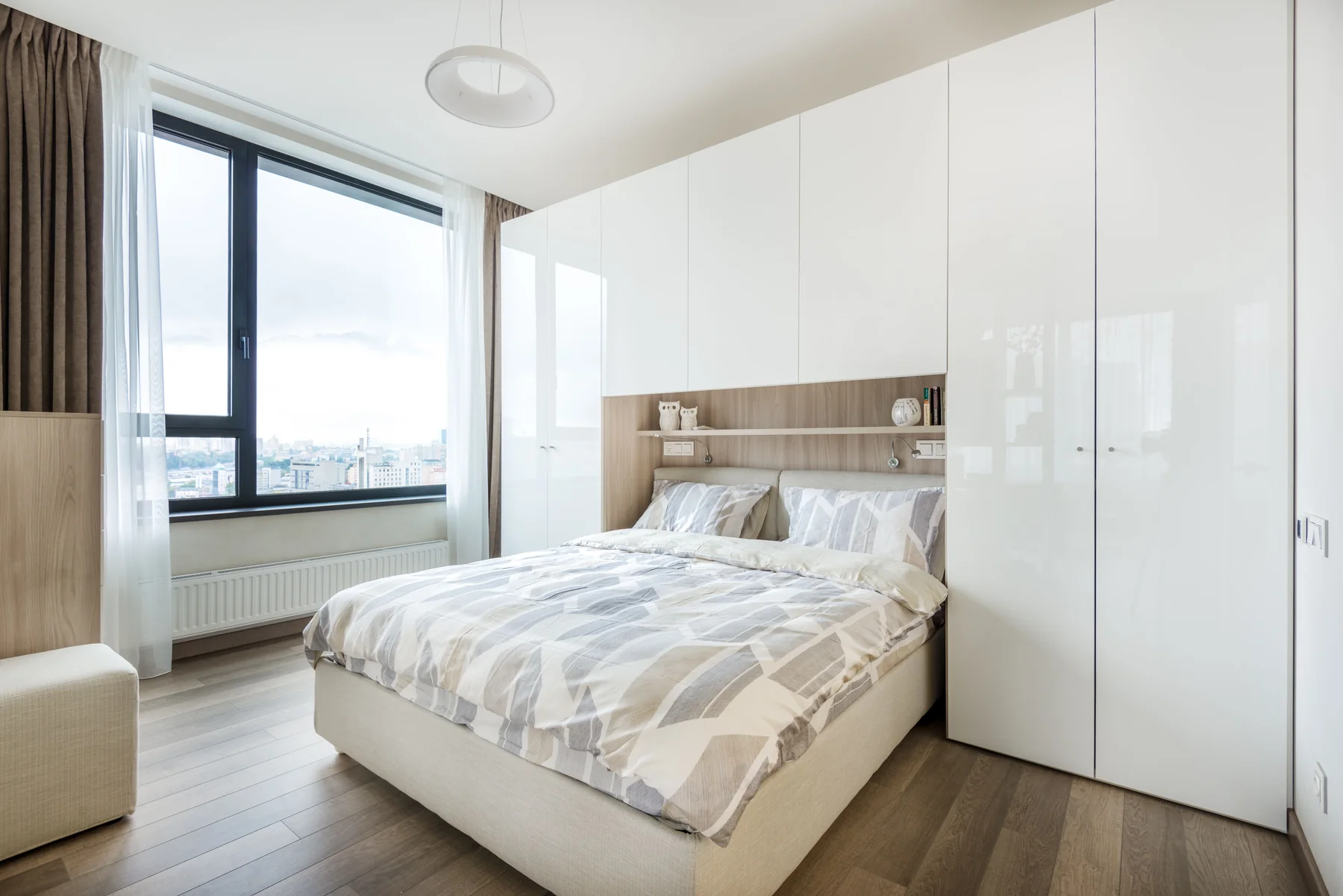
A restful bedroom starts with a usable layout and control over light. Position the bed and storage together, provide lighting within reach, and select window coverings for the actual conditions outside the apartment.
A bedroom should feel comfortable when it is occupied, not only when it is photographed. In Dubai apartments, bright glazing, nearby buildings and the position of existing wardrobes can shape the choices. Apartment interior design becomes more useful when it considers getting dressed, charging devices and moving through the room at night alongside the appearance of the headboard.
Place the bed before designing the feature wall
Draw the bed at its full external size, including the frame. Check the route from the door to the wardrobe and the space needed to use bedside furniture. A large headboard panel should follow the workable bed position, not dictate it.
If two people share the room, assess both sides equally. One person should not need to climb over the bed simply because a symmetrical photograph was prioritised. In a tight room, different bedside solutions may provide a better result than matching cabinets.
Plan for the light you actually receive
Observe the window in the morning, afternoon and evening. Note direct sunlight, reflections from neighbouring façades and light from outside after dark. These conditions vary by apartment, so another unit in the same building may need a different treatment.
Combine daytime privacy with a darker night setting where needed. Ask the curtain or blind supplier about coverage at the sides and top, not just the fabric label. Leave room for the treatment to stack without covering switches or preventing the window from operating.
Give each bedside a complete function
A bedside surface should hold the items used every night without becoming a general storage shelf. Consider a reading light, water, a book and device charging. Check the reach from the pillow before fixing switches or specifying wall-mounted fittings.
Keep lighting adjustable to the routine of the occupants. One person reading should not require the whole room to be brightly lit. For permanent electrical changes, agree positions with the designer and installer before the decorative finishes are complete.
Reduce the visual load of clothing storage
Clothes left in view often reflect a missing step in the storage plan. Provide somewhere for items that are not ready for washing but are not returning directly to the wardrobe. A small rail or defined shelf can be more useful than another decorative chair.
Check wardrobe access while the bedroom is fully furnished. Doors and drawers need their operating space, and a bed bench can become an obstacle. Prioritise convenient daily storage over display niches that leave practical items without a home.
Keep the evening reset simple
Choose a limited material palette and a small number of objects around the bed. The room can have texture and character without placing a decorative item on every surface. Use washable or maintainable textiles that suit the household's habits.
Before finishing, test the room with the main ceiling light off. Can you find what you need, reach the controls and move comfortably? The goal is a room that supports a quiet transition to rest, without promising that decoration alone will resolve a sleep problem.
Common questions
Are blackout curtains always necessary?
They are useful when outside light is unwanted, but the choice depends on personal preference and the window conditions. Check coverage and installation details; the fabric alone does not determine how dark the room becomes.
Can a bedroom include a desk?
Yes, if the working position does not obstruct wardrobe access and the equipment can be put away. Keep the desk lighting and storage distinct so work does not spread across the bedside area.