
Light & Materials / Guide 14
Apartment Interior Design Dubai: Lighting Scenes for Everyday Living
Plan lighting for a Dubai apartment with practical scenes for meals, reading, work and relaxing, supported by accessible controls and careful testing.
At a glance
Lighting scenes group the lights needed for a particular activity. Begin with normal routines, add task lighting where it is useful, and make controls understandable before considering automated features.
An apartment rarely needs the same lighting for breakfast, a video call and a quiet evening. Yet many interiors rely on one bright ceiling circuit for everything. Apartment interior design in Dubai can improve everyday comfort by planning several simple lighting conditions, each with a clear purpose and a convenient way to activate it.
Name the activities before choosing fittings
List a few realistic situations: preparing food, eating, reading, hosting and moving through the apartment at night. Identify where each happens and whether several activities occur at once. This gives the lighting plan a practical structure.
A scene does not need a complicated control system. It may simply combine a reading lamp with a lower background light. Start with the function and decide later whether separate switches, dimmers or an automated system make operation easier.
Place task light where the task happens
DEWA recommends directing light towards the activity instead of unnecessarily illuminating the whole room. In an apartment, this can mean a reading lamp beside a seat or a dedicated light at a working surface.
Check the light from the user's position. A lamp may be bright enough but still reflect in a screen, cast a shadow across a work surface or shine into another person's eyes. Test both the position and the direction before treating a fitting as final.
Use background light to connect the room
An isolated pool of light can feel uncomfortable if everything around it is dark. Add enough background illumination to keep the room understandable, particularly where people move between the kitchen, dining and living areas.
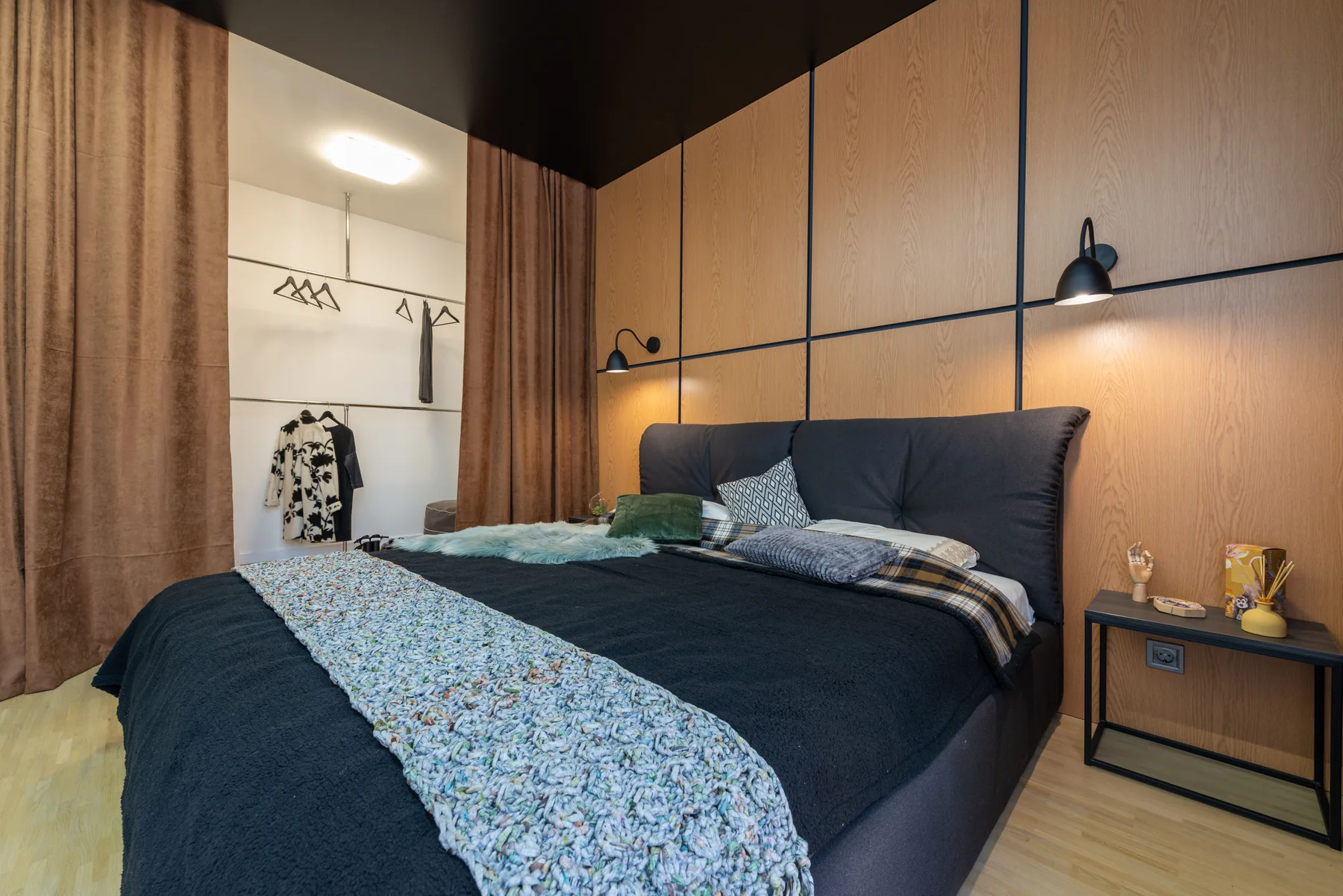
Consider how light falls on vertical surfaces as well as the floor. A softly lit wall or curtain can give an evening room depth. Avoid specifying decorative strips everywhere; each source should have a reason to exist and remain accessible for maintenance.
Make the controls obvious
Group switches logically and label complex controls where needed. A guest should be able to find a useful light without learning a whole system. Check the controls from the entrance, main seat and bedside positions that matter to the household.
For dimming or smart controls, ask the electrical installer to confirm compatibility with the actual lamps, drivers and existing installation. Test the intended combination before repeating it throughout the apartment. Attractive fittings do not guarantee smooth dimming.
Commission the lighting after furniture arrives
Lighting changes when curtains, rugs and furniture are in place. Walk through the finished apartment in the evening, sit in the main seats and check reflections in the glazing. Adjust portable lamps and any adjustable fittings before concluding that more light is needed.
Keep a short record of the preferred settings and replacement lamp specifications. A scene should be reproducible after a lamp is changed or a control is reset. The simplest system that supports the household's routines is often the most satisfying one to use.
Common questions
Do lighting scenes require a smart-home system?
No. Separate circuits, switches and portable lamps can create useful scenes. Automation is an option when it makes operation easier, but it should follow a clear lighting plan.
Should all lights have the same appearance?
They can have different functions and forms while sharing a coherent visual character. Check the selected lamps together so colour differences and reflections are deliberate rather than accidental.