
Living & Style / Guide 05
Apartment Interior Design Dubai: Quiet Luxury for High-Rise Living
Create a refined Dubai apartment through comfortable proportions, restrained materials, thoughtful lighting and details that work in daily life.
At a glance
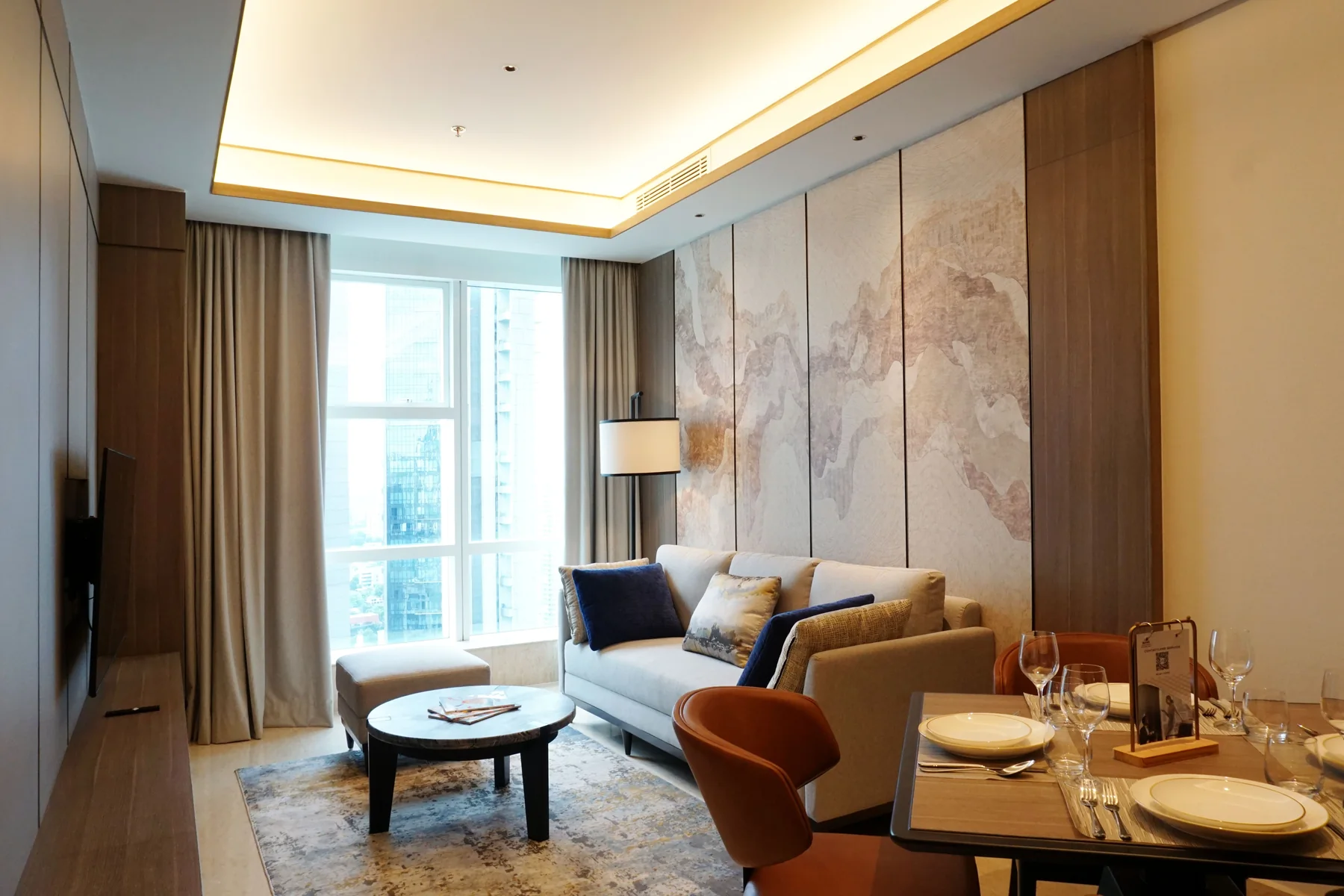
Quiet luxury comes from a few well-resolved choices: comfortable furniture, balanced proportions, tactile materials and reliable details. In a high-rise apartment, let the interior complement the outlook while remaining useful when the curtains are closed.
Apartment Interior Design Dubai searches often lead to dramatic stone walls and large statement lights. A quieter approach can be just as distinctive. It begins with how a door closes, how a chair supports you and how a room feels in the evening. These qualities are easier to appreciate when the apartment is not competing for attention at every surface.
Let one feature lead the room
Choose the main source of character: an outlook, a piece of art, a textured wall or a beautifully proportioned seating group. Then make the supporting decisions quieter. If the view is the focus, avoid placing tall furniture directly across it simply to achieve symmetry.
Test the room after dark as well. A skyline may disappear behind reflections in the glazing, so the interior needs its own composition. A lamp, a textile or a well-lit artwork can give the room a useful second focal point.
Spend attention on contact points
Handles, upholstery, drawer runners and table edges are experienced every day. Compare samples and working examples where possible. A comfortable chair with an ordinary-looking frame can contribute more to the home than an expensive piece that nobody wants to sit in.
Check the practical detail behind the appearance. Can the dining chair move easily on the floor? Can a cabinet door open without hitting an adjacent handle? Is a bedside switch reachable? Refinement often depends on these small relationships rather than the cost of a single material.
Build a restrained material family
Choose a small set of finishes that can repeat with variation. For example, a warm timber, a soft woven fabric and a muted metal can connect several rooms. The finishes need compatible undertones, not identical colours.
Use contrast selectively. A dark table may anchor a pale seating group; a textured curtain may soften smooth cabinetry. Avoid specifying a separate feature finish for every wall. Repetition makes individual details easier to notice and simplifies later additions.
Make room for ordinary possessions
A refined apartment still needs a place for chargers, remote controls, shopping bags and paperwork. Plan closed storage near the activity that creates these items. If clearing the living room requires carrying everything to a distant bedroom, clutter is likely to return.
Leave some display space deliberately empty. A collection looks more considered when each object has room around it. Storage should support the household's real habits, not depend on keeping the apartment in a permanent showroom state.
Judge the result by comfort over time
Sit in the main seats at different times of day. Check glare, reflections and the reach to drinks or a reading light. Walk through the room when several people are using it. These tests reveal issues that a styled photograph cannot.
Choose finishes you are prepared to maintain. Ask suppliers how the actual products respond to cleaning, spills and sunlight. A beautiful surface that creates constant worry may be a poor fit for the household, even if it suits the visual concept.
Common questions
Does quiet luxury require natural stone everywhere?
No. Proportion, comfort and coherent detailing matter more than covering large areas in a costly material. Use stone where its appearance and maintenance requirements suit the activity.
Can existing furniture fit this style?
Yes. Keep pieces with good proportions and useful functions, then edit the surrounding palette. Reupholstery, better lighting or removing unnecessary small items may improve the composition without replacing everything.