
Space & Planning / Guide 02
Apartment Interior Design Dubai: Studio Layouts for Work and Rest
Plan a Dubai studio apartment with distinct places to sleep, work and relax, using flexible furniture and privacy without blocking the light.
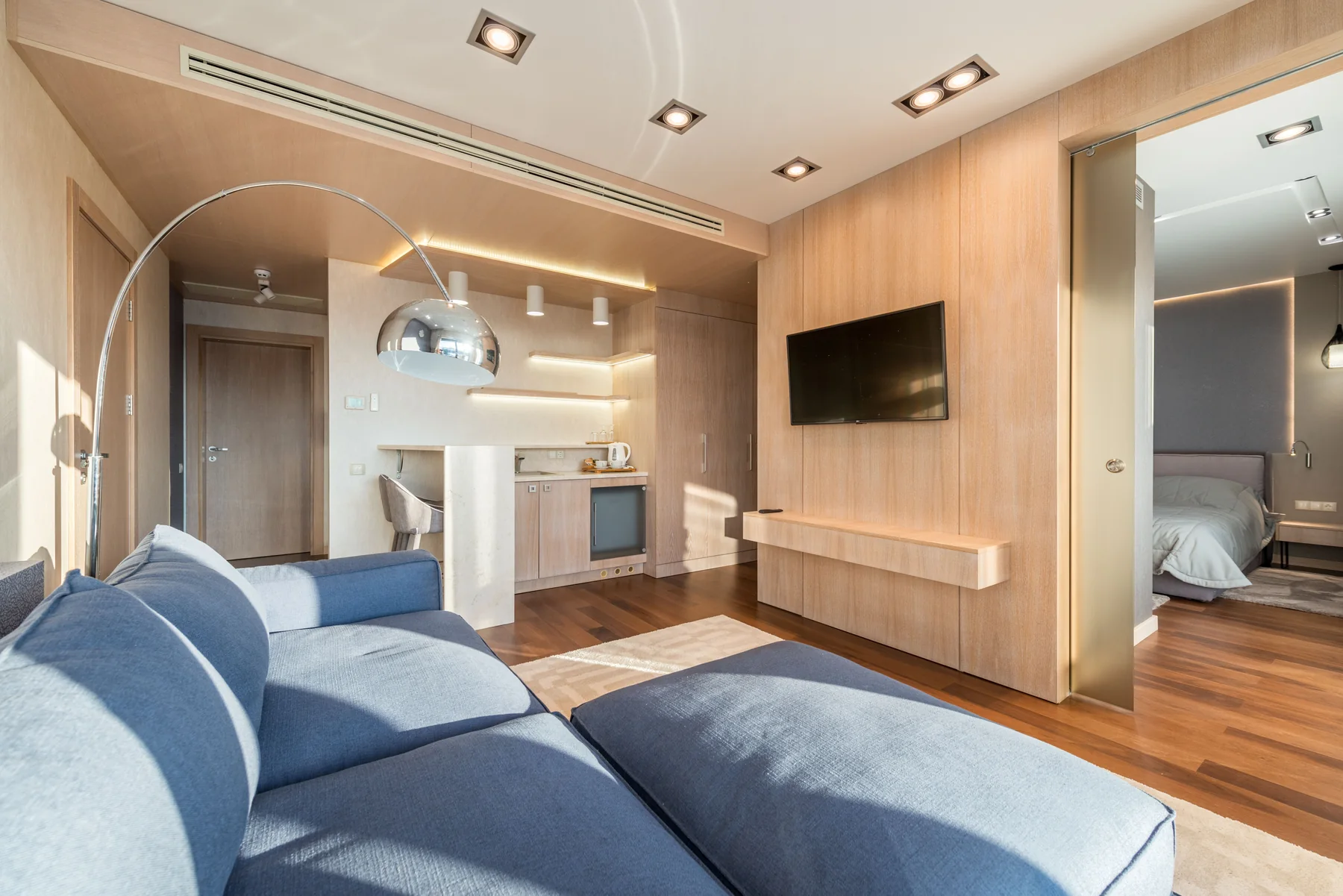
At a glance
Give a studio separate routines before giving it separate rooms. Position the bed, working surface and main seating so each has a clear purpose, then use lighting, rugs or a carefully placed screen to create boundaries.
A studio apartment may need to accommodate video calls, meals, visiting friends and a proper place to sleep in one room. Apartment Interior Design Dubai planning becomes more useful when it describes these transitions. The aim is a home that changes easily through the day, with fewer objects to move every time an activity changes.
Map a normal weekday
Write down where you wake up, dress, make coffee, work and unwind. Include simultaneous activities if two people share the studio. Someone taking a call while another cooks is a different design problem from a person working alone.
Use this routine to set priorities. A permanent desk deserves space when it is used all week. If work is occasional, a dining surface with an accessible cable tray may be enough. Avoid choosing a folding solution that requires clearing ten objects before every meal.
Give the bed a stable place
Place the bed where it can remain made and accessible without blocking a wardrobe or balcony door. Check both sides if two people use it. A bed pushed into a corner can free floor area, but the daily inconvenience should be an intentional trade-off.
Consider the view from the entrance and from the main seat. A low storage unit or an open screen can reduce the direct view of bedding. Keep the arrangement clear of ventilation openings and access panels; any fixed partition needs a professional assessment of the existing services.
Use boundaries that preserve borrowed light
A full-height solid divider can turn the back of a studio into a dark enclosure. Test a lower partition, slatted screen or curtain before committing to a permanent wall. Each provides a different degree of privacy, light transmission and maintenance.
A curtain is useful for visual separation but does not create a soundproof bedroom. If one person needs quiet during calls, agree how the studio will be used at those times. Furniture and fabric cannot solve every conflict between two overlapping routines.
Choose one surface for work deliberately
Locate the working surface so the screen is not directly reflecting a bright window. Check the chair in its pulled-back position and leave space for feet, power and everyday equipment. A shallow decorative console is rarely a good substitute for a desk used for several hours.
Place a closed drawer or cabinet nearby for the items that should disappear after work. A small lamp can mark the work zone without lighting the bed. The workstation feels calmer when cables are routed along the furniture rather than across a walking route.
Plan the change from day to evening
Create a short reset routine: laptop away, task light off, softer room lights on. Store the required items within reach so the change takes little effort. A rug can help define the seating group, provided its edges do not become obstacles.
Before buying multifunctional furniture, draw every operating position. Include a sofa bed fully open, a drop-leaf table extended and storage lids raised. The best solution is the one that works in its least convenient state as well as its most photogenic one.
Common questions
Is a sofa bed better than a permanent bed?
It depends on how often it must be folded and on personal comfort. Compare mattress quality, operating effort and where bedding will be stored. A permanent bed can be more practical when sleep is the priority.
Can a studio have a separate office?
A visually distinct work zone is often possible. A fully enclosed office depends on the plan, services and permissions. Begin with a dedicated surface and storage, then assess whether stronger separation is necessary.